

Overcome operational challenges in cleaning businesses: 4 tips from a real thriving cleaning service company
When Adrià, founder of Senyorial—a thriving cleaning business in Spain, started managing cleaning operations, he thought the hard part would be finding customers. Turned out, the real challenge wasn’t sales, it was keeping operations under control without losing his mind.
The cleaning industry is fast-paced and unpredictable. People come and go, clients expect consistency, and somehow success depends on you remembering hundreds of tiny details. For a long time, Adrià ran Senyorial’s operations through WhatsApp, Google Calendar, and blind trust—a risky combination.
To build something sustainable, he needed systems that worked even when he wasn’t watching every detail. After many trials and errors, he finally found what truly made operations run smoothly.
After our conversation with Adrià and learning from his experience, we gathered all the tips that helped him go from constant firefighting to running things like an actual cleaning business.
1. Building reliable task systems when staff keep changing
Tip: “Don’t rely on people remembering, make the tasks memorable for them.”
Turnover is common in the cleaning service. Many cleaners treat it as a temporary job, which means managers can’t always rely on long-term staff to remember every client detail.
At first, Senyorial handled this the old-fashioned way—explaining everything manually, week after week, hoping new staff would just “get it.” Eventually, they realized something crucial:
“If the knowledge lives in people, it disappears with people. If it lives in tasks, it stays forever!’’ Adrià said.
Adrià and his team started documenting every service using structured task lists and attached documentation for new hires, including access instructions, supply rules, photos, and client preferences.
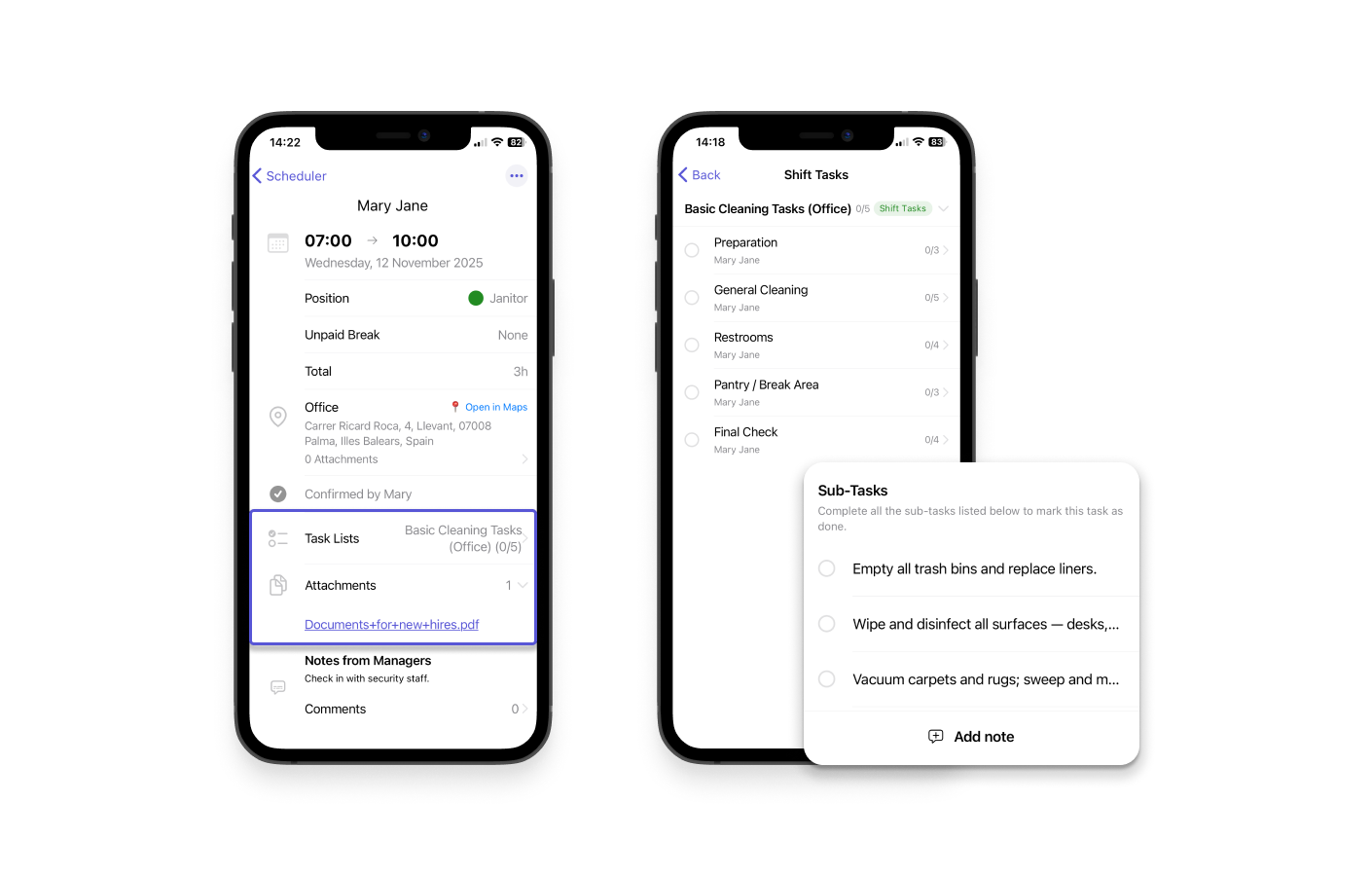
Now, a new cleaner can walk into an unfamiliar site and understand what to do instantly, so no phone call is required.
Takeaway for other cleaning service operators: If you find yourself repeating the same instructions every week, document them once and attach them to the task. That habit can replace hours of supervision.
2. Reducing ‘ghost jobs’ and accountability issues
Tip: “You can’t manage what you can’t see. Accountability starts with visibility.”
Like many service businesses, Senyorial sometimes had jobs marked as completed—except clients said no one had shown up. Adrià found himself constantly stuck mediating between “My employee says they were there” and “My client says they weren’t.”
The solution was simple but powerful: introducing clock-in/out with geolocation and photos tied to each task, all managed on Camelo.
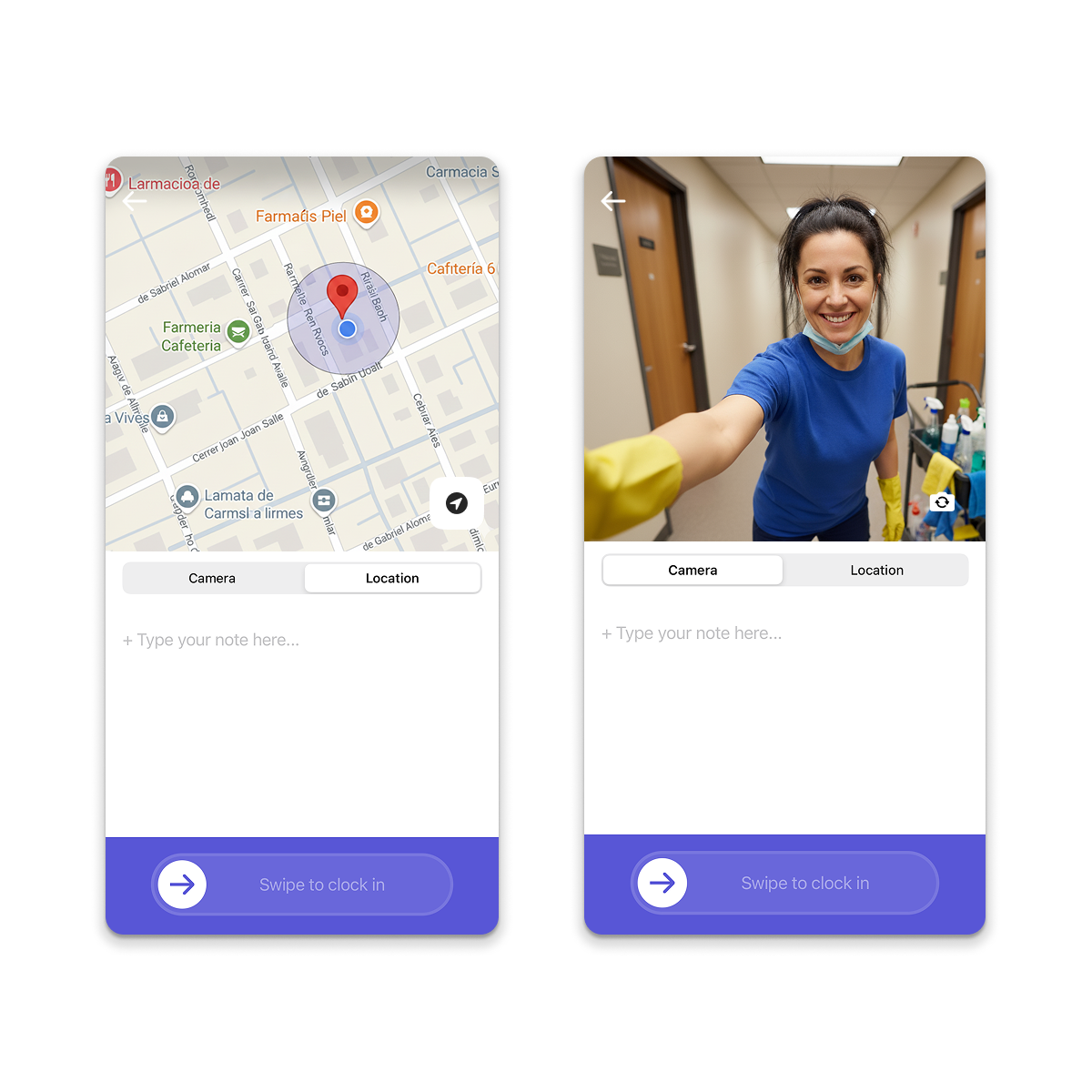
Cleaners now start and finish their shifts directly on-site, clock in/out through the app, sometimes with a quick photo for evidence. Sure, there’s still the occasional clock-in from the office followed by a trip to the café next door (“Great coffee, by the way!” Adrià joked), but those cases dropped from 15% to less than 1%.
Takeaway for other cleaning service operators: Stop debating what happened. Record it. Transparency protects you, your team, and your client relationship.
3. Simplifying scheduling and availability management (before Google Calendar broke your brain)
Tip: “Scheduling should be drag-and-drop—not detective work.”
Before Camelo, Senyorial’s schedules looked like a stack of overlapping Google Calendars. “It looks like lasagna,” Adrià laughed. He would zoom in, squint, and pray he wasn’t double-booking someone.
Meanwhile, employees texted him “Can’t work tomorrow at 15:00”, 5 minutes before midnight. “My brain was burning more calories than the cleaners,” he shared.
Switching to a centralized scheduling system, like Camelo, changed everything. With Camelo’s availability and open shift feature, instead of guessing who’s available, employees now set their availability in advance, and managers publish open shifts right from the app for everyone qualified to claim.
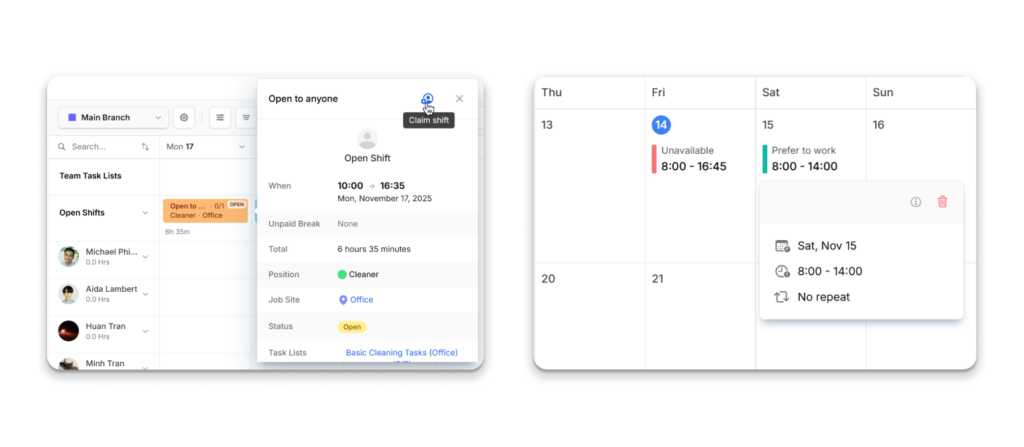
Takeaway for other cleaning service operators: Your team should tell you when they can work, not the other way around. Scheduling is logistics—not psychic work.
4. Streamlining onboarding so you don’t have to repeat yourself 500 times
Tip: “Onboarding shouldn’t be spoken—it should be documented once and reused forever.”
Before creating a proper onboarding process, every new hire meant another long call explaining everything from cleaning methods to company values—often with limited results. “I was spending more time explaining how the business works than actually running the business,” Adrià said.
Now, Senyorial uses a welcome playbook inside Camelo that automatically shares all key information the moment a new cleaner joins—operations, company culture, rules, and expectations. No onboarding call needed anymore.
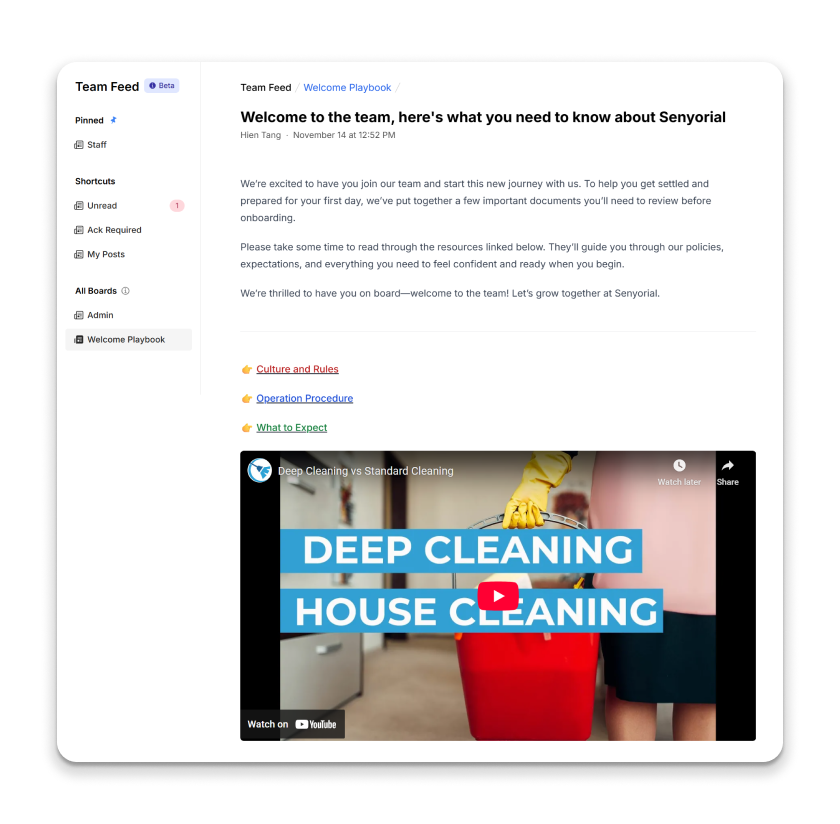
The team even plans to add short videos soon. “Because let’s be honest, nobody reads long texts anymore,” Adrià told us.
Takeaway for other cleaning service operators: If you explain something more than twice, turn it into a playbook. Future-you will thank you.
Final thoughts from Senyorial’s founder
Adrià told us that the cleaning business doesn’t grow by working harder—it grows when it runs smoothly without constant firefighting. And that only happens when your operations aren’t held together by memory, WhatsApp threads, or good intentions—but by a single source of truth that keeps everything in place automatically.
“For us, that system is Camelo. It’s not just a tool—it became the operating backbone of the entire company. Every task, every clock-in, every instruction, every shift—all tracked, assigned, and executed without me chasing anyone,” Adrià said.
With systems in place, the team stopped managing chaos and started managing growth. Adrià even hopes to share his experience and exchange insights with other cleaning businesses.
“If you’re facing similar challenges and want to exchange insights, you can reach me via https://senyorial.es—always open to professional conversations with fellow cleaning service operators!”


